
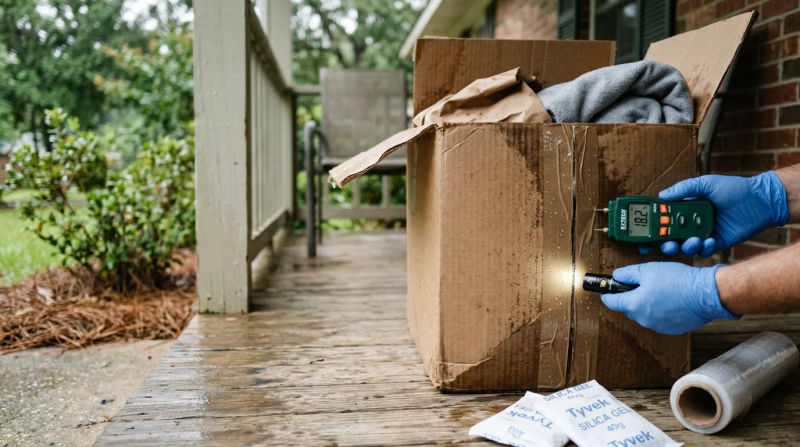
You’ve spent weeks carefully packing, labeling every box, and preparing for your new home. The moving truck pulls away, and after a long day, you finally arrive. You start unloading, but something feels wrong. The bottom of a cardboard box feels soft, almost damp. When you open it, a faint musty odor greets you, and the pages of your favorite books are slightly wavy. In a climate like ours here in Alexandria, this scenario is all too common, especially during the fall when late hurricane season brings unpredictable rain and consistently high humidity.
Moving in Central Louisiana presents a unique challenge: moisture. It’s an invisible force that can compromise the integrity of your belongings if not managed correctly. As a logistics supervisor with over a decade of experience in this region, I’ve seen firsthand how our humid weather can turn a well-organized move into a frustrating experience. Understanding the risks and knowing how to mitigate them is the key to ensuring your possessions arrive in the same condition they left.
Common Signs and Symptoms
Moisture damage during a move isn't always as dramatic as a completely soaked box. It often starts subtly. Being able to spot the early warning signs can help you assess the situation and prevent further damage upon arrival. When you're unpacking, be on the lookout for these red flags:
- Compromised Cardboard: The most obvious sign is the condition of your moving boxes. Look for cardboard that feels soft, spongy, or damp to the touch. The corners and bottoms are especially vulnerable. You might also see discoloration, water stains, or boxes that have begun to sag or lose their shape. A structurally weak box is a sign that its contents were exposed to significant moisture.
- A Musty or Mildewy Odor: Your nose is one of your best tools. If you open a box containing textiles, books, or upholstery and detect a distinct musty, earthy smell, it’s a clear indicator that mold or mildew has begun to form. This happens when items are packed with trapped moisture in a dark, unventilated space - exactly like a sealed moving box.
- Visible Mold or Mildew: In more advanced cases, you may see fuzzy or speckled growth on surfaces. This can appear as black, green, or white spots on cardboard, fabric, wood, and even leather. It’s crucial to handle these items with care, preferably outdoors, to avoid spreading spores inside your new home.
- Warped or Swollen Items: Wood furniture, picture frames, and paper products like books or documents are highly susceptible to humidity. Moisture absorption can cause wood to swell and warp, drawers to stick, and paper to feel wavy or crinkled.
- Condensation Inside Wrappings: If you’ve used plastic wrap or bags, check for condensation on the inside. This 'sweating' occurs when there’s a rapid temperature change - like moving an item from a cool, air-conditioned home into a hot, humid moving truck. That trapped moisture is a breeding ground for mildew.
What Causes This Problem
Understanding why these issues occur is the first step in prevention. The problem isn't just rain; it's the pervasive Louisiana humidity that saturates the air, especially in the late summer and fall. Here are the primary culprits behind moisture-related moving damage.
First, cardboard is hygroscopic, meaning it naturally absorbs moisture from the surrounding air. On a typical Alexandria day with 80-90% humidity, a standard moving box acts like a sponge. It pulls moisture from the atmosphere, becoming weaker and creating a damp environment for its contents. This is a major challenge for humid weather packing.
Second, temperature differentials create condensation. When our crews move items from a climate-controlled home (around 72°F) to the back of a moving truck that can easily exceed 100°F in the sun, any air trapped inside boxes or plastic wrap will release its moisture as condensation. This is why you might find items damp even if it never rained on moving day.
This leads directly to the question of how to prevent mold on moving boxes. The key is to create a barrier between your belongings and the humid environment. This involves a combination of proper materials and strategic packing techniques. For instance, using plastic liners inside cardboard boxes can protect sensitive items. Desiccant packets (the silica gel packs you find in new shoes) can also be added to boxes with electronics or important papers to absorb ambient moisture.
When it comes to packing clothes for Louisiana humidity, fabrics are particularly at risk. Cotton, wool, and other natural fibers can quickly develop mildew. We often recommend using vacuum-sealed bags. They not only save a significant amount of space but also remove all the air - and therefore, the moisture - protecting your clothes completely.
This brings us to a frequent debate: plastic bins vs cardboard for moving.
- Cardboard Boxes: They are inexpensive, readily available, easy to label, and stack uniformly. However, as we've discussed, they offer almost no protection against heavy rain or ambient humidity.
- Plastic Bins: These are a superior choice for moisture protection. They are water-resistant, durable, and reusable. They are ideal for protecting valuable or susceptible items like clothing, electronics, photos, and documents. The downside is their higher initial cost and the fact that they can be harder to stack securely if you have a mix of different sizes and brands.
For most moves, our teams recommend a hybrid approach: use plastic bins for your most moisture-sensitive items and high-quality, new cardboard boxes for everything else, packed with protective measures in mind.
When to Call a Professional
Deciding between a DIY pack-and-move and hiring a professional service often comes down to risk tolerance, time, and the value of your belongings. While packing yourself can save money, the humid Alexandria climate significantly raises the stakes.
Consider calling for professional help if:
- You Have High-Value or Irreplaceable Items: Antiques, fine art, extensive libraries, high-end electronics, or heirloom furniture are all highly vulnerable to humidity. Experienced professionals use specific materials and methods, like specialized crating and moisture-absorbent padding, to protect these investments.
- Your Move is Large or Complex: The longer the packing and loading process takes, the more exposure your belongings have to the elements. Our trained crews work with an organized, efficient workflow designed to minimize the time your items spend outside. We can often pack and load an entire home in a fraction of the time it takes for a DIY move, drastically reducing the risk of moisture absorption.
- You Lack the Right Materials: Professional moving services have access to a full inventory of packing supplies designed for humid weather packing. This includes heavy-duty boxes, waterproof plastic wrap, furniture pads, desiccants, and airtight containers. Sourcing these materials yourself can be time-consuming and expensive.
- You Are Moving During Peak Humidity/Rainy Season: If your move is scheduled for August, September, or any other time known for pop-up thunderstorms and oppressive humidity, professional expertise is invaluable. Experienced movers know how to work around weather, protect entryways, and load the truck strategically to shield items from rain.
Ultimately, a professional moving team isn't just about heavy lifting. It's about a standardized process and logistical expertise. We bring the right equipment and a trained crew that understands how to mitigate risks specific to our local climate.
Conclusion
Moving in a hot and humid climate like Alexandria's adds a layer of complexity that can't be ignored. Moisture damage, from weakened boxes to mildewed clothing, is a real and costly risk. The key to a successful move is proactive prevention. By understanding how humidity affects your belongings, choosing the right packing materials - whether plastic bins for sensitive items or properly prepared cardboard boxes - and employing smart packing techniques, you can significantly reduce your risk.
Don't wait until you're unpacking in your new home to discover a musty, damp surprise. Acting early and planning for the weather is the best strategy. Assess your belongings, consider the timing of your move, and don't hesitate to seek expert advice. A little extra preparation can ensure your possessions arrive safe, dry, and ready to be enjoyed in your new space.
If you notice any of these signs or are concerned about protecting your belongings during an upcoming move, contact a local Moving professional for an inspection and guidance.