
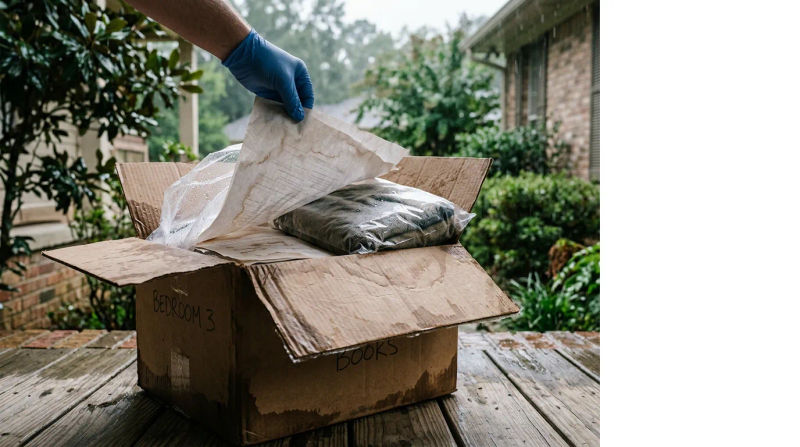
You’ve spent weeks carefully packing up your home. The boxes are stacked neatly in the garage or carport, ready for moving day. But after a few typical September days in Pineville, with that thick humidity and a surprise afternoon rain shower, you notice something’s wrong. The bottom of a box feels soft, a marker label has smeared, and there’s a faint, musty smell in the air. Suddenly, the move feels a lot more stressful. That dampness is more than an inconvenience; it’s a threat to your belongings.
As a logistics supervisor with over 12 years of experience managing moves across Central Louisiana, I've seen how our region's climate can turn a well-organized move into a salvage operation. Humidity is the invisible challenge that many homeowners overlook until it’s too late. Recognizing the early warning signs is the first step in protecting your possessions.
Common Signs and Symptoms
How can you tell if the humid air is compromising your packing efforts? Before you see visible mold, there are several red flags. Our crews are trained to spot these issues immediately during a pre-move walkthrough or on moving day itself. Here’s what you should look for:
- Sagging or Soft Cardboard: Cardboard boxes are your first line of defense, but they are highly susceptible to moisture. If you press on the side or bottom of a box and it feels spongy or gives way easily, it has absorbed too much humidity. This weakens its structural integrity, making it prone to collapse during stacking and transit.
- Musty Odors: Your nose is one of the best tools for detecting a problem. A damp, earthy, or mildewy smell coming from your boxes indicates that moisture is trapped inside, creating the perfect environment for mold and mildew to begin growing, even if you can't see it yet.
- Smudged Ink and Peeling Labels: If the ink from your marker has bled or your packing labels are curling at the edges, it’s a clear sign of high ambient moisture. This not only makes identifying contents difficult but also points to a broader humidity issue.
- Condensation on Surfaces: Check any items packed in plastic bins or wrapped in plastic. If you see fogging or water droplets on the inside, moisture was trapped during packing. This is especially dangerous when packing electronics in humid weather, as condensation can cause short circuits and permanent damage.
- Changes in Textures: Open a test box. Are your books’ pages feeling wavy or warped? Do powders like flour or spices feel clumpy? This happens when paper and dry goods absorb airborne moisture.
- Damp-Feeling Fabrics: Clothes, linens, and upholstery packed in cardboard boxes can act like sponges. If they feel cool or slightly damp to the touch, they’ve absorbed humidity from the air and are at high risk for developing mildew.
- Visible Mold or Mildew: This is the most severe sign. Black, green, or white fuzzy spots on the outside or inside of boxes, or directly on your belongings, mean a significant moisture problem has been present for some time. At this stage, remediation is necessary.
What Causes This Problem
The root cause is simple: water vapor in the air. Here in Louisiana, especially during the late hurricane season in September, the air is often saturated with moisture. When warm, humid air comes into contact with cooler surfaces - like items stored in an air-conditioned house that are then moved to a hot garage - condensation forms. This is the same reason a glass of iced tea sweats on a summer day.
Cardboard is hygroscopic, meaning it actively attracts and holds water molecules from the surrounding environment. A box that feels perfectly dry indoors can become damp and weak after just a few hours in a non-climate-controlled space. Many homes in Pineville, particularly the classic 1950s and 1960s Ranch-style houses, have carports instead of enclosed garages. While convenient, packing and staging boxes in a carport leaves them almost completely exposed to the humid air and sudden downpours.
Here are some key humidity packing tips to understand the cause and prevent mold in moving boxes:
- Trapped Air: Sealing a box in a humid environment traps that moist air inside. As temperatures fluctuate in a moving truck, that moisture can condense on your belongings.
- Improper Materials: Using old or cheap boxes that may already be weakened, or failing to use desiccants (silica gel packs) for sensitive items, allows moisture to wreak havoc.
- Extended Staging Time: The longer your packed boxes sit in a garage, shed, or on a porch, the more time they have to absorb ambient humidity. Our process emphasizes efficient workflows to minimize this staging time, moving packed items directly from the home to the truck whenever possible.
When to Call a Professional
Deciding between a DIY pack and hiring a professional service often comes down to risk tolerance, especially in a place like Pineville. If you're undertaking a small move during a rare dry spell, you might manage on your own. However, for most household moves, the risks associated with humidity are too great.
Consider calling experienced professionals if:
- You Have High-Value or Sensitive Items: This includes artwork, antiques, important documents, and electronics. Professionals understand the nuances of packing electronics in humid weather. We use anti-static materials, seal items in plastic, and often use desiccants to absorb any trapped moisture, ensuring they arrive safely.
- You Lack Climate-Controlled Staging Space: If your only option is to store boxes in a garage, carport, or shed for more than a day, you are fighting a losing battle against humidity. A professional team is equipped to execute a move with a streamlined process, drastically reducing the time your belongings are exposed to the elements.
- The Weather Forecast is Unfavorable: With September's unpredictable rain and consistently high humidity, professional crews have the equipment and standardized processes to protect your items during loading and transport, using covered ramps, floor runners, and efficient loading techniques.
- You Want Peace of Mind: The moving process is already complex. Worrying about mold and moisture adds another layer of stress. A qualified professional team takes on that responsibility, using proven methods and commercial-grade materials to ensure your belongings are protected from point A to point B.
Conclusion
Moving in a humid climate like Pineville presents unique challenges that go beyond simply getting items into a box. Moisture is a silent saboteur that can cause irreversible damage before you even notice it. By learning to recognize the early signs - soft boxes, musty smells, and damp fabrics - you can take proactive steps to protect your belongings.
For a successful move, it’s crucial to build a Pineville packing checklist that specifically addresses moisture control. This includes using new, sturdy boxes, strategically using plastic wrap and bins, and minimizing the time items spend in non-climate-controlled areas. Remember that the best defense is a good offense. Acting early and using the right techniques are key. Don't wait for a musty odor or a collapsed box to signal a problem.
If you notice any of these signs, or if you want to ensure your move is protected from the start, contact a local moving professional for an assessment and expert assistance.