
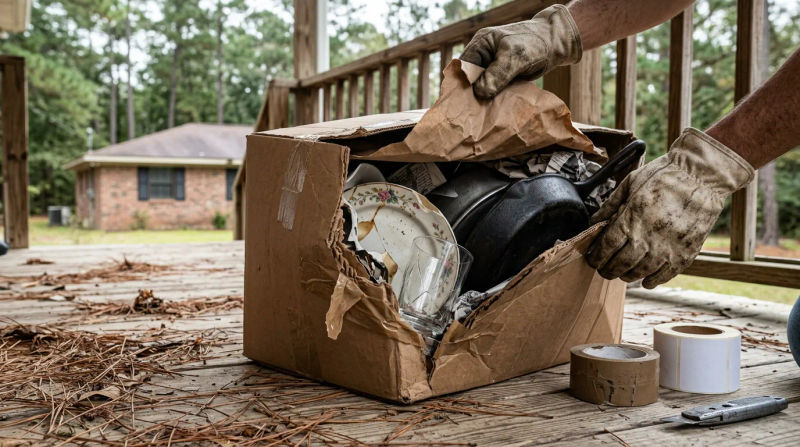
It’s a crisp October weekend in Pollock. The cooler temperatures feel like the perfect motivation to get your upcoming move organized before the holiday season hits. But as you stand in your living room, you’re surrounded by a chaotic mix of half-filled boxes, misplaced packing tape, and the sinking feeling that you’ve seriously underestimated how much stuff you own. You realize you’re out of bubble wrap, and a quick trip to the store isn’t so quick when you live in a more rural area - that’s an hour of precious packing time lost. This scenario is one we see often. A rushed timeline combined with a few common missteps can turn an organized move into a stressful ordeal.
As a Senior Moving & Logistics Supervisor with over a decade of experience, I’ve seen firsthand how small packing errors can snowball into significant problems on moving day. Here are some of the most common DIY packing mistakes our crews observe, especially during the busy fall moving season.
Common Signs and Symptoms
Recognizing the early signs of a packing project going off the rails is the first step to correcting course. If you see any of these happening in your home, it’s time to pause and reassess your strategy.
- The Constant Supply Run: You’ve made three trips for more boxes, tape, and packing paper this week. In an area like Pollock, where supply runs can take up a significant chunk of your day, this is a major time-waster and a clear sign of poor initial planning.
- The Unliftable Box: You’ve packed a large box with all your books, and now it requires two people to even budge it. Overpacking large boxes not only risks injury but also increases the chance the box will fail and spill its contents.
- The Rattle Test Fails: You gently shake a box labeled “Kitchen Glasses,” and you hear the distinct, terrifying clinking of glass on glass. This is a telltale sign of insufficient cushioning, one of the biggest issues when learning how to pack fragile items for a move.
- Vague or Missing Labels: Boxes are labeled with single words like “Stuff,” “Kitchen,” or “Bedroom.” When you arrive at your new home, this creates chaos, as movers won’t know where to place boxes, and you’ll have to open a dozen just to find the coffee maker.
- Packing Away Your Essentials: You realize your phone charger, daily medications, and the kids' favorite toys are sealed in a box somewhere in the garage. Forgetting to set aside an “Open First” box with essentials for the first 24 hours is a classic oversight.
- Unprotected Furniture: Your beautiful wood dining table or upholstered sofa is sitting unwrapped, exposed to potential scratches, dings, and dirt. Many homes in this area from the 1990s and 2000s feature large great rooms and master suites with substantial furniture pieces that require proper protection.
- Cross-Contaminated Boxes: You open a box to find a mix of bathroom toiletries, office supplies, and a few kitchen utensils. Packing items from different rooms together is a common result of a disorganized process and makes unpacking incredibly inefficient.
What Causes This Problem
These DIY packing mistakes don't happen because of a lack of effort; they almost always stem from a lack of a systematic plan and experience. Here are the root causes we typically see:
- Underestimating the Scope: This is the biggest culprit. Homeowners, particularly those in the larger, two-story homes common in the Pollock area, often misjudge the sheer volume of possessions accumulated over the years. Garages, attics, and master suites in these 90s- and 2000s-era properties hold far more than people think.
- Absence of a Checklist: Simply “starting to pack” without a structured plan is a recipe for disorganization. A detailed Pollock LA packing checklist should be your first step, outlining a room-by-room schedule, supply needs, and key dates.
- Rushing the Process: With the holidays approaching, the October cool-down prompts many to move quickly. Procrastination leads to a last-minute rush, where proper techniques are abandoned in favor of just getting things into a box. This is when fragile items break and boxes are mislabeled.
- Using Improper Materials: In an attempt to save money, people often use free boxes from grocery or liquor stores. These boxes are often not sturdy enough for heavy items, aren't uniform in size for stable stacking in a truck, and may carry pests or odors.
- Inexperience: Most people only move a handful of times in their entire lives. Our professional crews, on the other hand, pack and move homes every single day. They have developed standardized workflows and techniques for everything from wrapping crystal stemware to protecting oversized furniture, ensuring both safety and efficiency.
When to Call a Professional
Deciding between a full DIY pack and hiring help can be a tough decision. The debate of self-pack vs professional packing Pollock often comes down to three factors: time, complexity, and peace of mind.
You might be well-suited for a DIY pack if:
- You have a very small home or apartment.
- You have several weeks or even months to pack at a leisurely pace.
- You have a knack for organization and have created a detailed plan.
- Your belongings do not include many high-value, fragile, or unusually shaped items.
However, we strongly advise considering professional assistance when:
- You’re on a tight deadline. If your move is less than two weeks away and you haven’t started, a professional team can pack an entire home in a day or two.
- You own numerous fragile items. If you have collections of china, artwork, antiques, or expensive electronics, the expertise of a professional packer is invaluable. They know precisely how to pack fragile items for a move to ensure they arrive intact.
- Your home is large. The neo-traditional homes in this region, with their multiple bedrooms, great rooms, and garages, present a significant packing challenge. A trained crew has the manpower and organized workflow to tackle a large-scale job efficiently.
- You want to minimize physical strain and stress. Packing is physically demanding work. Professionals have the training and equipment to do it safely, saving you from potential injury and the mental exhaustion of managing the entire process.
Conclusion
Packing for a move is one of the most critical phases of the entire relocation process. Avoiding common DIY packing mistakes like underestimating supplies, using improper boxes, and poor labeling can make the difference between a smooth transition and a chaotic one. The key is to start with a clear, organized plan and a realistic assessment of the time and effort required.
Take the time to create a Pollock LA packing checklist, gather more supplies than you think you’ll need, and be methodical in your approach. Don't wait until you're overwhelmed by a mountain of boxes and a fast-approaching moving day. Acknowledging you need help early is a sign of smart planning, not failure.
If you recognize any of these signs or feel overwhelmed by the task ahead, contact a local professional for an assessment and assistance.